
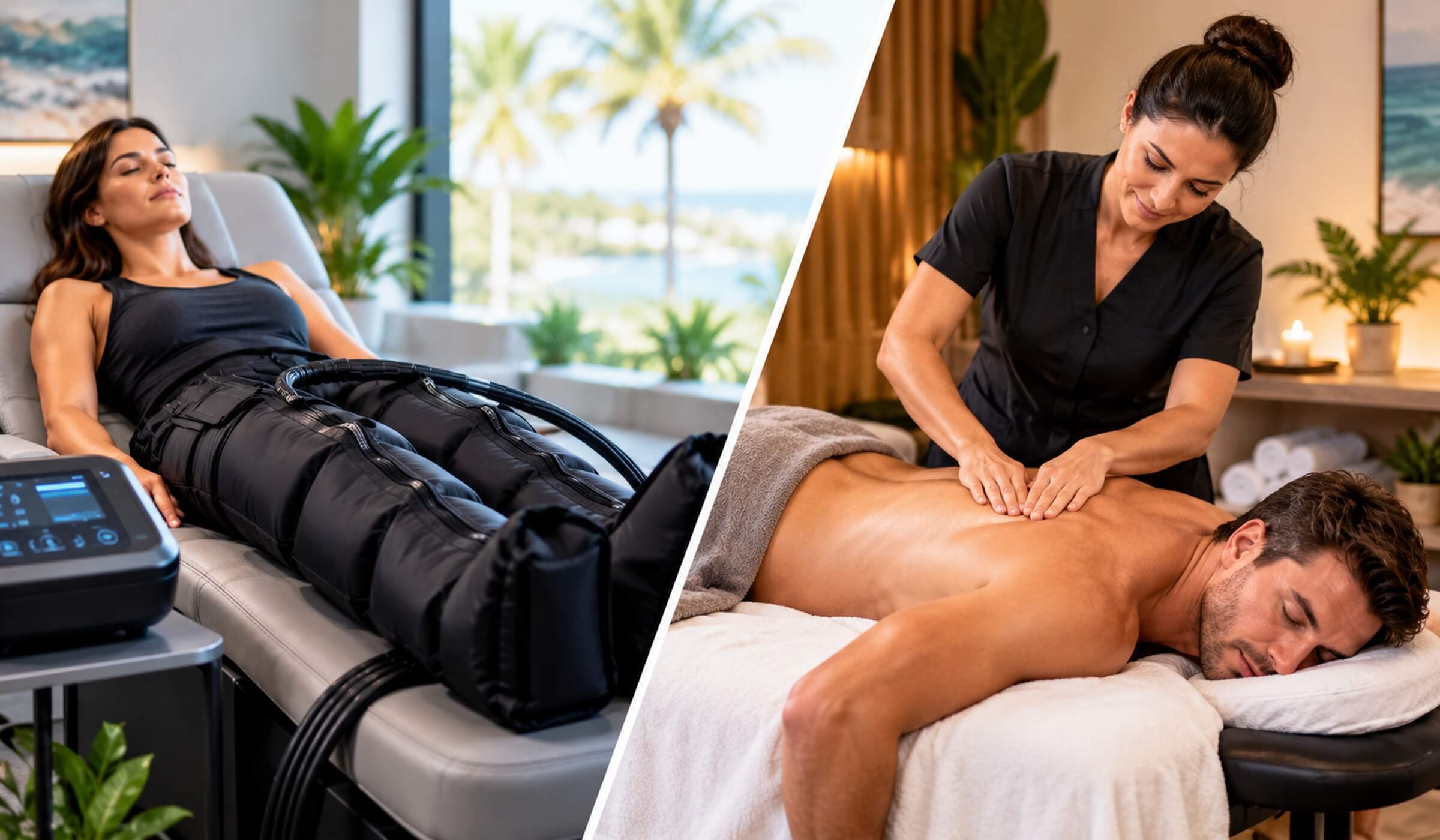
Compression therapy and massage are both popular recovery and relaxation treatments, but they work in different ways and serve unique purposes. Compression therapy uses specialized equipment to apply controlled pressure, often to the legs, to support circulation and muscle recovery. Massage involves hands-on manipulation of muscles and soft tissues to relieve tension and promote relaxation. Understanding these differences can help you choose the right approach for your needs in Clearwater.
What Is Compression Therapy?
Compression therapy involves wearing inflatable sleeves or boots that rhythmically inflate and deflate to apply pressure to the limbs, usually the legs. This sequence of pressure mimics the natural muscle pump action, encouraging improved blood flow and lymphatic drainage. Many people use compression therapy to support muscle recovery after workouts, reduce sensations of tired legs, and enhance circulation. Sessions typically last from 20 to 30 minutes and are non-invasive with no hands-on touch required. During a session, you can sit or recline comfortably while the machine does the work.
What Is Massage Therapy?
Massage therapy involves a trained therapist using their hands (or sometimes tools) to manipulate muscles, tendons, and other soft tissues. There are many types of massage, but most focus on easing muscle tension, improving flexibility, and promoting relaxation. A massage session usually lasts anywhere from 30 to 60 minutes and can vary in intensity from gentle stroking to deep tissue work. Massage helps relieve muscle knots, reduce stress, and improve overall wellbeing. Sessions are hands-on and typically require you to wear minimal clothing with discretion and comfort maintained by draping.
How Do They Work Differently?
Compression therapy works by applying external pressure in a controlled, rhythmic pattern which helps increase blood circulation and can reduce swelling or feelings of fatigue. It’s particularly beneficial for muscle recovery, supporting tired legs, and post-exercise care. On the other hand, massage targets specific muscle areas to manually break down muscle tightness and trigger relaxation responses. Massage can work deeper into muscles, tendons, and connective tissues, which makes it effective for relieving muscle tension and stress.
While compression therapy is more mechanical and focused on circulation, massage is more personalized and can address specific muscle pain or stress areas based on the therapist’s assessment.
What Does a Session Feel Like?
During compression therapy, you’ll typically wear compression boots or sleeves that inflate in sequences of gentle pressure followed by release. The sensation is often described as a firm but comfortable squeezing around the limbs that gradually moves up the leg. It’s relaxing and pain-free for most people.
Massage feels quite different since it involves direct touch. You may feel pressure, kneading, or stretching depending on the technique and intensity. Some areas might feel tender if muscles are tight, but it should never be painful. The therapist adjusts pressure based on your comfort and specific needs.
Who May Benefit from Each?
Compression therapy is commonly used by athletes, people with circulation concerns, those experiencing tired or swollen legs, and anyone seeking enhanced recovery after physical activity. It’s also convenient for those who prefer a passive form of therapy without hands-on involvement.
Massage therapy suits people looking to relieve muscle tension, manage stress, or address specific areas of discomfort. It’s beneficial for chronic muscle tightness, stress-related symptoms, or those who enjoy hands-on relaxation.
Some people choose to combine both methods to support muscle recovery and relaxation, especially around intense training periods or injury recovery phases.
How Long Do Sessions Usually Last and How Often Should You Try Them?
Compression therapy sessions typically last about 20 to 30 minutes. Many clients enjoy multiple sessions per week during periods of intense training or recovery, but frequency can vary based on individual needs and goals.
Massage sessions usually take longer, ranging from 30 minutes to an hour. Frequency depends on lifestyle, muscle condition, and stress levels—some people schedule weekly massages, while others opt for monthly visits or as needed.
Both therapies can be tailored to fit your schedule and wellness goals.
Are There Situations When You Should Consult a Healthcare Professional?
Before trying compression therapy or massage, it’s wise to consult with a healthcare professional if you have certain health conditions such as deep vein thrombosis, severe varicose veins, uncontrolled high blood pressure, infections, fractures, or open wounds. Compression therapy is generally safe but should be avoided or modified in these cases. Similarly, some massage techniques may not be appropriate with specific medical conditions.
If you’re unsure, a healthcare provider’s advice can help ensure safe and effective use of these therapies.
Try Compression Therapy in Clearwater
If your legs feel tired after workouts, travel, or long days on your feet, compression therapy can be a relaxing addition to your recovery routine. Scape Relaxation offers compression therapy sessions in Clearwater, Florida, designed to help support muscle recovery and circulation. You might also consider combining compression therapy with massage or other complementary treatments like red light therapy to enhance your overall relaxation and recovery experience. Explore our compression therapy sessions or book your appointment online today.
Frequently Asked Questions
How long is a typical compression therapy session?
Most compression therapy sessions last between 20 and 30 minutes, providing sufficient time for the rhythmic compression cycles to support circulation and muscle recovery.
Is compression therapy painful?
Compression therapy is generally not painful; the sensation is like a firm, gentle squeezing that cycles through the limbs. If the pressure ever feels uncomfortable, it can be adjusted.
What should I wear to a compression therapy session?
Wear comfortable clothing that allows easy access to your legs or arms. Many people keep their clothes on during the session since compression sleeves or boots are placed over them.
Can I exercise right after a compression therapy session?
Yes, many people use compression therapy post-workout to support muscle recovery, and light to moderate exercise afterward is usually fine.
How often can I do compression therapy?
Frequency depends on your needs, but some people use it several times a week during periods of intense physical activity or recovery, while others may use it less often for maintenance.
Can I combine compression therapy with massage?
Yes, combining these therapies can offer complementary benefits—compression therapy supports circulation and recovery, while massage targets muscle tension and relaxation.
Next Steps
- Explore our compression therapy sessions in Clearwater
- Book your compression therapy appointment today
- Learn how massage and compression therapy can work together
- See our full range of wellness therapies in Clearwater