

Some days, relaxing sounds easy until you actually try to do it.
You get home, sit on the couch, pick up your phone, answer one more message, check one more notification, and suddenly an hour has passed. Your body may have stopped moving, but your mind never really did.
That’s one reason people are looking for simpler ways to create a real pause in their day. Not another task. Not another complicated wellness routine. Just a quiet place where there isn’t much expected of you.
A salt room session can offer exactly that.
At Scape Relaxation in Clearwater, salt therapy—also known as halotherapy—combines a peaceful environment with finely dispersed dry salt particles. You sit back, get comfortable, breathe normally, and give yourself some space away from the usual noise of the day.
No complicated routine required.
What Is a Salt Room Session?
A salt room is a specially designed space where very fine particles of dry salt are released into the air using equipment called a halogenerator.
This practice is known as halotherapy, from the Greek word halos, meaning salt.
Modern halotherapy is inspired by the environment found in natural salt caves and mines. Instead of traveling underground, you can experience a controlled salt environment while comfortably relaxing indoors.
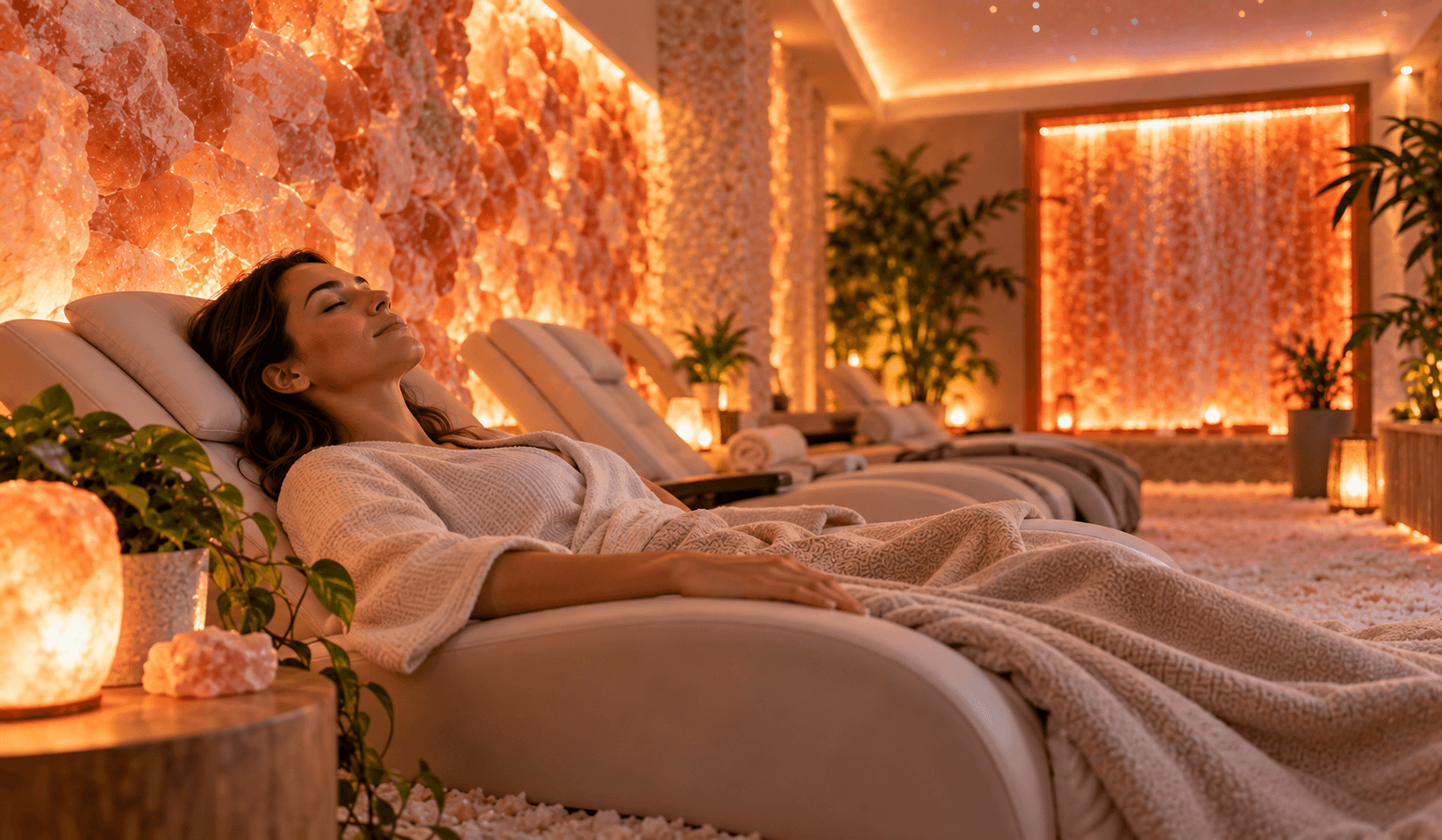
At Scape Relaxation, the Halo Salt Therapy Room uses SaltPerfect technology from HaloFX to distribute extremely fine salt particles throughout the room. The space also includes cushioned zero-gravity loungers, so the experience is designed to feel more like taking a quiet break than undergoing a traditional treatment.
For most people, there isn’t much to do during a session.
You simply settle in and breathe normally.
And sometimes, having nothing to do is exactly the point.
Why Is It So Hard to Actually Slow Down?
Our bodies aren’t always very good at following our schedules.
You can finish work at 5:00, but your mind may still be running through emails at 7:00. You can sit down after spending the entire day on your feet and still feel restless. Even scrolling through your phone can keep your attention constantly engaged.
Real relaxation usually requires a change in environment.
That’s part of what makes a salt room appealing.
Once you’re inside, there’s less pulling at your attention. You aren’t cleaning the house, checking your laptop, making dinner, or trying to squeeze another task into the day.
You’re simply giving yourself permission to stop for a while.
The salt room itself may be the reason you walked through the door, but the uninterrupted quiet can become an equally valuable part of the experience.
What Does a Salt Room Feel Like?
If you’ve never tried halotherapy, you might imagine walking into a room covered in giant salt crystals.
The reality is much simpler.
During dry salt therapy, a halogenerator breaks salt into microscopic particles and circulates them through the room. These particles may be too small to see.
You relax in the room while breathing normally.
At Scape, the experience is designed around comfort, with white cushioned zero-gravity loungers that allow you to settle into a relaxed position.
There are no complicated instructions to follow.
No massage therapist working around you.
No workout.
No pressure to accomplish anything.
You can simply sit, breathe and allow yourself to be still.
For someone whose normal day is filled with appointments, screens, traffic, work, family responsibilities and constant stimulation, that simplicity can feel surprisingly refreshing.
Why Do People Try Halotherapy?
People visit salt rooms for different reasons.
Some are curious about the respiratory wellness benefits commonly associated with halotherapy. Others simply enjoy the environment and use the session as part of their relaxation or self-care routine.
Research has explored whether inhaled dry salt particles may help support mucus clearance and certain respiratory symptoms. However, halotherapy research remains limited, and stronger clinical evidence is still needed.
That distinction matters.
A salt room shouldn’t be viewed as a replacement for medical care or prescribed treatment. It is better understood as a complementary wellness experience that some people enjoy alongside their regular health and self-care routines.
And you don’t need to arrive with a specific health goal.
Sometimes the goal can simply be:
I need half an hour where nobody needs anything from me.
That’s a perfectly good reason to make time for yourself.
Salt Therapy Can Become a Break From Screen Time
Think about how many hours you spend looking at screens.
Your phone when you wake up.
A computer during work.
Your phone during lunch.
Navigation in the car.
Television in the evening.
Then your phone again before bed.
We have become very good at physically resting while keeping our brains constantly occupied.
A salt room creates an opportunity to break that pattern.
Instead of filling every quiet moment with content, you can simply be in the room.
You might close your eyes.
You might focus on your breathing.
You might notice how tense your shoulders were without realizing it.
You might even get bored for a few minutes—and that’s not necessarily a bad thing.
Not every moment has to be productive.
A Good Option After a Busy Workday
You don’t have to wait until you’re completely exhausted to make time for recovery.
Salt room sessions can fit naturally into the transition between work and home.
Instead of carrying the entire day with you into the evening, you can create a clear break between the two.
That may be especially appealing if your workday involves:
- Long hours at a computer
- Constant phone calls or meetings
- Spending most of the day on your feet
- Driving for extended periods
- Working in a busy or noisy environment
- Managing people, customers or deadlines
A quiet wellness session won’t remove tomorrow’s responsibilities.
But it can give today’s responsibilities somewhere to end.
Salt Rooms Aren’t Just for Stressful Days
Self-care often becomes something we think about only when we’re already drained.
But relaxation doesn’t have to be emergency maintenance.
Some people prefer to build wellness sessions into their normal routine—just like exercise, walking, stretching or taking time away from work.
A salt room session could become your quiet reset once a week, after a particularly busy day, or whenever you feel like you’ve been moving too fast.
There doesn’t need to be anything wrong before you decide to slow down.
Can Salt Therapy Support Breathing Comfort?
This is one of the most common reasons people become curious about halotherapy.
Dry salt particles are inhaled naturally while you sit in the room. Researchers have studied halotherapy for its potential effects on mucus clearance and respiratory comfort, and some studies have reported positive results.
However, the science isn’t settled.
Halotherapy should therefore be considered complementary rather than a treatment for asthma, allergies, COPD or other medical conditions.
If you have a respiratory condition, significant health concerns, are pregnant, or aren’t sure whether halotherapy is appropriate for you, speak with your healthcare provider before starting.
You should also continue any medication or treatment prescribed by your doctor.
What Should You Do During a Salt Room Session?
Very little.
That’s one of its best features.
You don’t need to meditate correctly.
You don’t need a breathing technique.
You don’t need to stretch.
You don’t have to somehow force yourself to feel relaxed.
Get comfortable and let the session happen.
If closing your eyes feels good, close them.
If you want to sit quietly and let your thoughts wander, that’s fine too.
The goal isn’t to become perfectly calm within five minutes.
It’s simply to create the conditions where slowing down becomes easier.
Can You Combine Salt Therapy With Other Wellness Sessions?
Yes, and this is where visiting a wellness studio can be different from treating relaxation as a once-a-year spa day.
Scape offers several wellness experiences in one location, including red light therapy, robotic zero-gravity massage, vibroacoustic therapy, PEMF, far infrared heat therapy, compression therapy and other self-guided options.
Depending on your goals, you might use a salt room session as the quieter portion of a broader relaxation routine.
For example, after a busy week, you may prefer a session focused almost entirely on slowing down. On another day, you might combine relaxation with services focused more on muscle recovery.
The important part is creating a routine that feels sustainable rather than turning wellness into another obligation.
Salt Therapy in Clearwater, FL
For people in Clearwater, Palm Harbor, Dunedin and the surrounding Tampa Bay area, taking time to unwind doesn’t necessarily require turning the entire day into a spa trip.
Scape Relaxation offers a more flexible approach to wellness in a modern, self-guided setting.
The Halo Salt Therapy Room at Scape Relaxation is designed to give you a quiet environment where you can sit back in a zero-gravity lounger, breathe normally and step away from everyday distractions for a while.
Sometimes wellness doesn’t need to be complicated.
Sometimes you just need somewhere to stop.
Give Yourself Permission to Do Nothing for a While
We’re constantly encouraged to do more.
Exercise more.
Work harder.
Be more productive.
Answer faster.
Stay connected.
But feeling better doesn’t always come from adding something else to your schedule.
Sometimes it comes from intentionally removing things for a little while.
No emails.
No errands.
No chores.
No need to perform.
Just a comfortable chair, a quiet room and a little time that belongs entirely to you.
A salt room session isn’t about escaping your life.
It’s simply a chance to step away from the noise long enough to return to it feeling a little more refreshed.
And on a busy day, that can be more valuable than it sounds.
Frequently Asked Questions About Salt Room Sessions
What is halotherapy?
Halotherapy, commonly called salt therapy, involves spending time in a controlled environment where microscopic dry salt particles are dispersed into the air by a halogenerator. You breathe normally while relaxing in the room.
What do you do during a salt room session?
You generally don’t need to do anything special. You can sit or recline comfortably, breathe normally, close your eyes and use the time to relax away from everyday distractions.
Does salt therapy help with stress?
A quiet salt room can provide a calm environment that many people use as part of their relaxation routine. While halotherapy shouldn’t be considered a medical treatment for stress or anxiety, taking dedicated time away from screens and daily responsibilities may make it easier to unwind.
Is salt therapy good for your lungs?
Halotherapy has been studied for its potential effects on respiratory symptoms and mucus clearance, but current scientific evidence is still limited. It should be considered complementary wellness rather than a replacement for medical treatment.
Who should talk to a doctor before trying salt therapy?
People with serious respiratory or cardiovascular conditions, active illnesses or other significant health concerns should speak with a healthcare professional before trying halotherapy. Pregnant individuals should also discuss new wellness therapies with their healthcare provider.
Where can I try salt therapy in Clearwater?
Scape Relaxation offers Halo Salt Therapy at its wellness studio in Clearwater, Florida. The salt room uses a halogenerator to distribute fine dry salt particles and includes cushioned zero-gravity loungers designed for comfortable relaxation.