


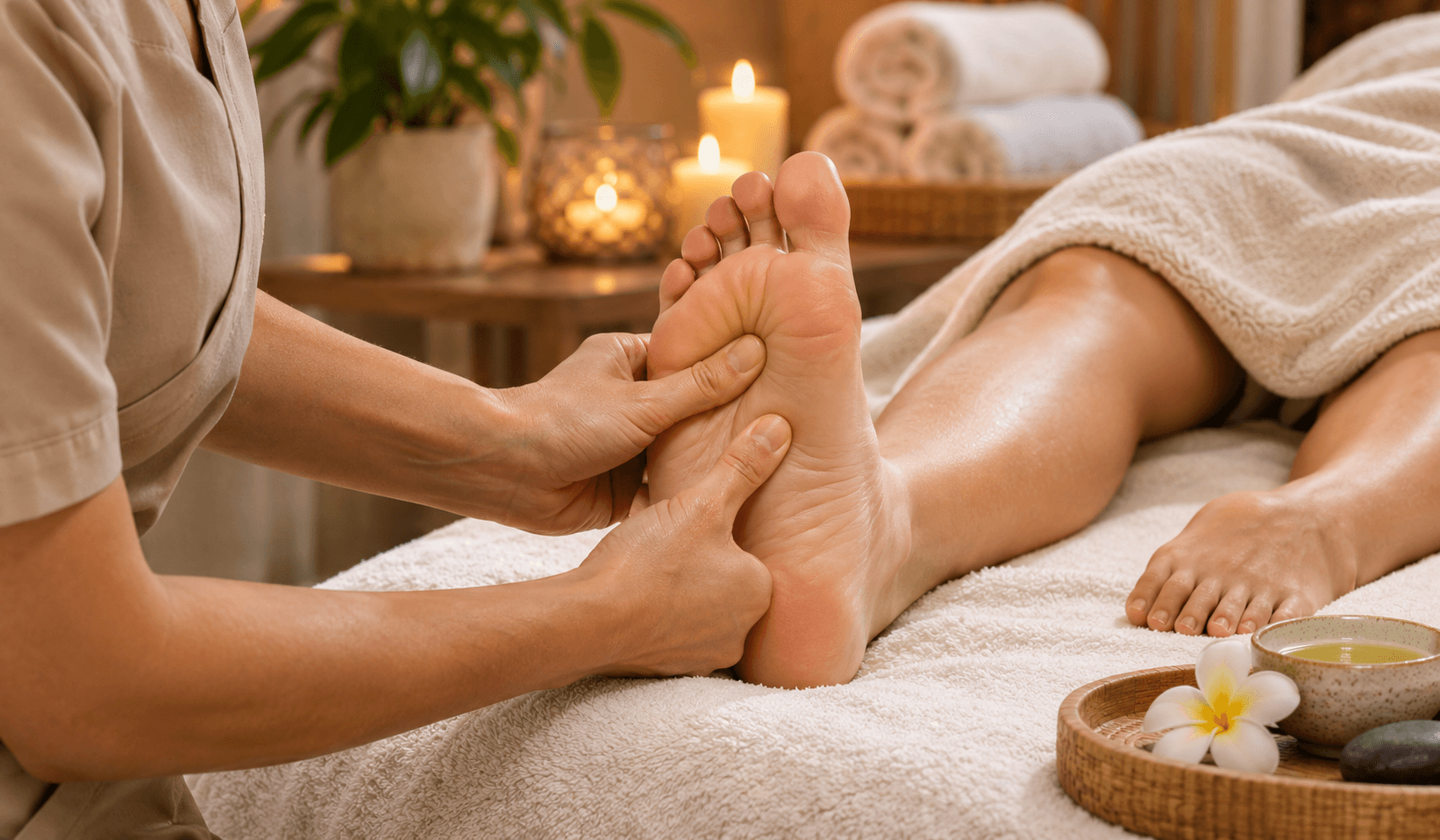
Foot reflexology and massage both offer relaxation and support wellness but work in different ways. Reflexology focuses on applying pressure to specific points on the feet linked to other parts of the body, while massage involves manipulating muscles and soft tissues to ease tension and promote comfort. Understanding how each works can help you choose the best option for your needs.
What Is Foot Reflexology and How Does It Work?
Foot reflexology is a therapy based on the idea that specific points on the feet correspond to different organs and systems in the body. During a session, a therapist applies targeted pressure to these points using hands, thumbs, and fingers to stimulate relaxation and encourage a sense of balance. The practice aims to support overall well-being through these reflex points, rather than directly treating muscle tightness or injury.
Sessions typically last 30 to 60 minutes. Clients remain fully clothed except for shoes and socks, and are usually seated or lying comfortably. The pressure applied varies from gentle to firm but should not be painful. Many people notice a calming effect, decreased foot discomfort, and a general sense of relaxation during and after a reflexology session.
What Is Massage and How Does It Work?
Massage therapy involves manual manipulation of muscles, tendons, ligaments, and soft tissues to relieve tension, improve circulation, and promote relaxation. Different massage styles, such as Swedish, deep tissue, or sports massage, target muscle groups to reduce stiffness, improve flexibility, or support recovery from exercise.
During a massage, you usually lie on a massage table partially or fully undressed, with towels covering areas not being worked on. Sessions commonly last from 30 to 90 minutes. Therapists use hands, fingers, forearms, and sometimes tools to knead and stretch muscles, adjusting pressure according to comfort and treatment goals. Many find massage to be deeply relaxing and helpful in easing muscle soreness or tension.
How Do Foot Reflexology and Massage Differ?
While both therapies promote relaxation, the main difference lies in their focus and technique. Foot reflexology centers on the feet and is based on reflex points connected to other body parts rather than muscle manipulation. It is often used for its calming effects and to support overall wellness.
Massage targets muscles and soft tissues throughout the body or in specific areas, aiming to alleviate muscular tension and improve circulation. It typically involves a broader touch and deeper physical manipulation compared to reflexology.
In terms of sensations, reflexology is more precise and may feel like firm pressure or gentle probing on certain spots of the foot. Massage varies widely but usually feels like kneading, stroking, or stretching of the muscles.
Who May Benefit from Each Therapy?
People seeking relaxation, stress relief, or a non-invasive wellness practice may find foot reflexology beneficial. It’s a good option for those who prefer staying clothed during the session and enjoy targeted pressure on the feet.
Massage is often preferred by those with muscle tension, soreness, or stiffness, including athletes or anyone recovering from physical activity. It is also helpful for improving circulation and addressing specific muscular discomfort.
Both therapies can complement each other and may be combined with other relaxation or recovery methods, such as compression therapy or far infrared heat, to enhance overall benefits.
What Should You Expect During a Session?
Reflexology sessions are typically quiet and relaxing, with the focus on your feet. You can expect to sit or recline comfortably while the therapist applies pressure to mapped reflex points. The environment is calm, and you might feel sensations ranging from tingling to gentle discomfort depending on pressure.
Massage sessions often involve removing or adjusting clothing for access to muscles, with towels used for privacy. The atmosphere is usually serene with soft music or ambient sounds. Pressure is adapted to your preferences and goal of the session—whether light relaxation or deeper muscle work.
After either session, there is generally no downtime, and clients often feel relaxed and refreshed. Drinking water afterward is recommended to support circulation.
Are There Situations When You Should Consult a Healthcare Professional First?
If you have foot injuries, circulatory issues, infections, deep vein thrombosis, or other serious medical conditions, it’s best to consult a healthcare professional before trying reflexology or massage. Pregnant individuals should seek advice to ensure safety and appropriateness of pressure points or massage types.
While both treatments are generally safe, therapists will typically check your health history before beginning to tailor the session accordingly.
Frequently Asked Questions
How long does a foot reflexology session last?
A typical foot reflexology session ranges from 30 to 60 minutes depending on your preferences and specific needs.
Does reflexology hurt?
Reflexology should not be painful. Pressure is firm but gentle. If you experience discomfort, communicate with your therapist so they can adjust the pressure.
Can I combine massage and reflexology?
Yes, many people benefit from combining both therapies for relaxation and muscle support. Some wellness centers offer packages that include reflexology and massage sessions.
What should I wear to a reflexology session?
You can stay fully clothed, but you’ll need to remove your shoes and socks to access your feet comfortably.
How often should I get a massage or reflexology?
Frequency depends on your goals, but many people find sessions every 1-2 weeks helpful for maintaining relaxation and managing muscle tension.
Can I exercise after a massage or reflexology session?
Yes, light exercise is generally fine, but listen to your body. Taking a rest day can sometimes enhance recovery after deeper tissue work.
Next Steps
- Explore foot reflexology and massage sessions at Scape Relaxation in Clearwater to find what suits your wellness needs.